

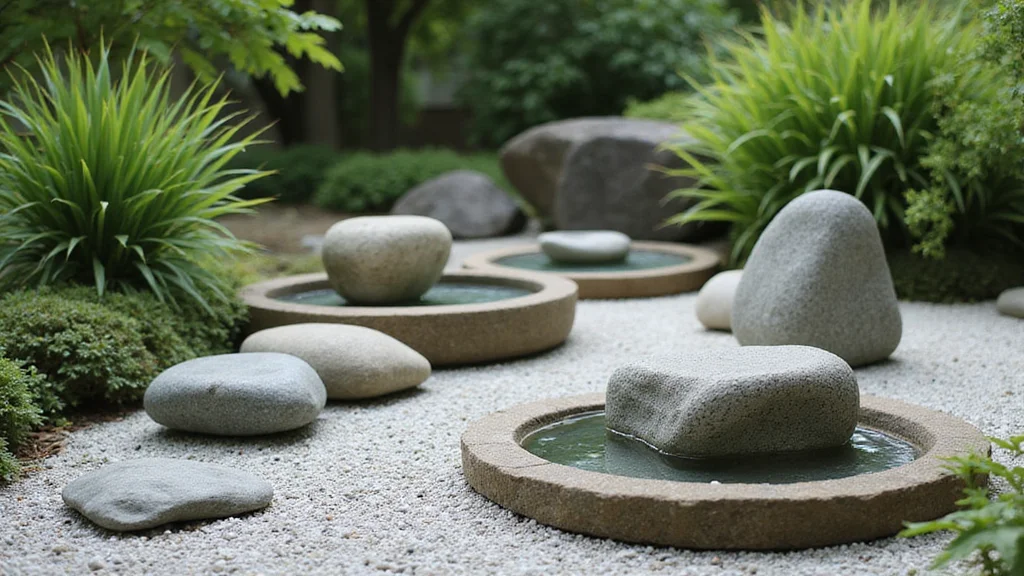
Creating a peaceful space in your home or garden can feel like a daunting task. With the chaos of everyday life, many of us are craving a little calm. That’s why I put together this guide on designing a Zen garden meditation space. This post is for anyone who is looking to cultivate tranquility and serenity in their surroundings. Whether you’re a seasoned gardener or just starting out, these ideas will help you create a calming oasis.
If you find joy in gardening or simply want a quiet place to retreat and reflect, you’re in the right spot. This guide offers inspiration and practical tips to help you design a minimalist container garden that’s perfect for meditation. You’ll discover how to incorporate elements like mindful plant choices, serene water features, and natural pathways that invite peace into your life.
What you’ll gain from this post are 20 handpicked inspirations to bring serenity into your gardening efforts. Each idea focuses on enhancing tranquility, so you can create a space that truly feels like an escape. From tranquil sand patterns to peaceful seating areas, these suggestions will guide you in making a garden that not only looks beautiful but also nurtures your well-being. Let’s dive in and explore how to transform your surroundings into a haven of calmness.
Key Takeaways
– Explore 20 Zen garden ideas that focus on creating a peaceful meditation space.
– Learn how to select mindful plants that complement your design and promote tranquility.
– Discover practical tips for incorporating natural pathways and serene water features into your garden.
– Understand the importance of reflective surfaces and soft lighting in enhancing the calming atmosphere.
– Get inspired by various minimalist container gardening techniques for effortless maintenance and beauty.
1. Tranquil Sand Patterns

Raked sand creates a calming atmosphere in your Zen garden. The gentle curves can evoke waves or ripples, making the space feel alive. Use fine white sand in a flat container, and let your creativity flow. Pinterest is full of inspiration for beautiful sand patterns that radiate peace.
To make your sand patterns truly unique, get a simple wooden rake or even a stick. You can also add pebbles to enhance the design. This is a mindful activity that allows you to focus and connect with your garden.
Tips to Enhance Your Sand Patterns:
– Experiment with spirals and waves in your designs.
– Incorporate small stones for visual interest and focal points.
– Surround the sand with tiny plant containers for added greenery.
Creating these patterns invites you to engage deeply with your tranquil space, offering a chance to unwind and reflect.
2. Minimalist Stone Arrangements

Stones symbolize strength and balance in a Zen garden. Large, smooth stones arranged in groups create a sense of harmony. Use odd numbers like three or five to make the arrangement visually appealing. These stones can represent natural elements like mountains or islands.
Fill gaps with pebbles to soften the look. This design not only enhances beauty but also promotes a feeling of stability. It’s a simple way to add a natural element to your meditation space.
Stone Arrangement Tips:
– Mix different shapes and textures for visual interest.
– Choose a standout stone with a unique shape or color.
– Surround stones with low plants for balance.
This eye-catching design encourages a grounding experience, perfect for deepening your meditation.
3. Serene Water Features
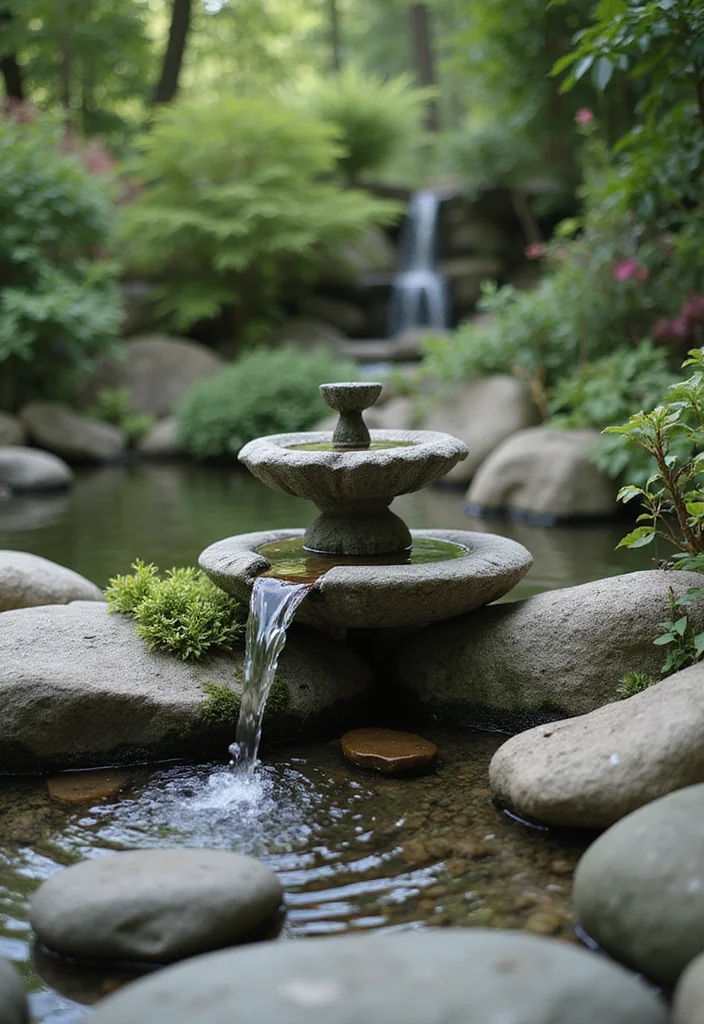
Water brings a sense of purity to your Zen garden. A small fountain or bowl can create a peaceful sound that enhances relaxation. The gentle trickle of water promotes mindfulness, making your garden feel tranquil. Choose a simple design that fits seamlessly with your overall aesthetic.
Consider a stone basin or a bamboo spout for a traditional touch. If space is limited, a compact tabletop fountain can work beautifully. Its soothing presence invites calmness into your meditation routine.
Water Feature Tips:
– Go for a solar-powered option for sustainability.
– Surround the feature with smooth stones for a cohesive look.
– Keep the water clean for maximum tranquility.
Incorporating water enriches your garden’s sensory experience, perfect for fostering peace and reflection.
4. Mindful Plant Choices
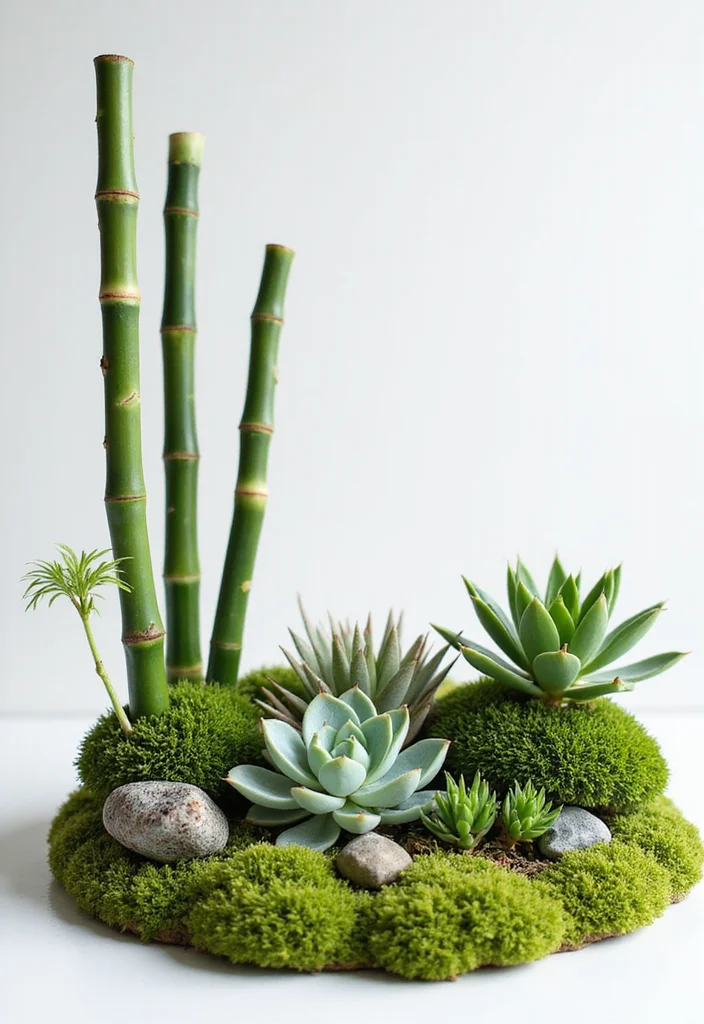
When selecting plants for your Zen garden, aim for those that evoke calm and simplicity. Low-maintenance options like succulents, bamboo, or moss thrive well in containers. Choose plants that require little care yet contribute to the serene vibe.
Group plants by texture and height for visual interest while keeping colors muted. This creates a tranquil look that aligns with minimalist design principles. Your garden can feel lush yet peaceful, ideal for meditation.
Plant Selection Tips:
– Mix evergreen and flowering plants for year-round beauty.
– Avoid bright or overly fragrant flowers to maintain calm.
– Use trailing plants that drape over containers for softness.
Mindful plant choices create a nurturing environment that enhances your meditation experience.
5. Natural Pathways
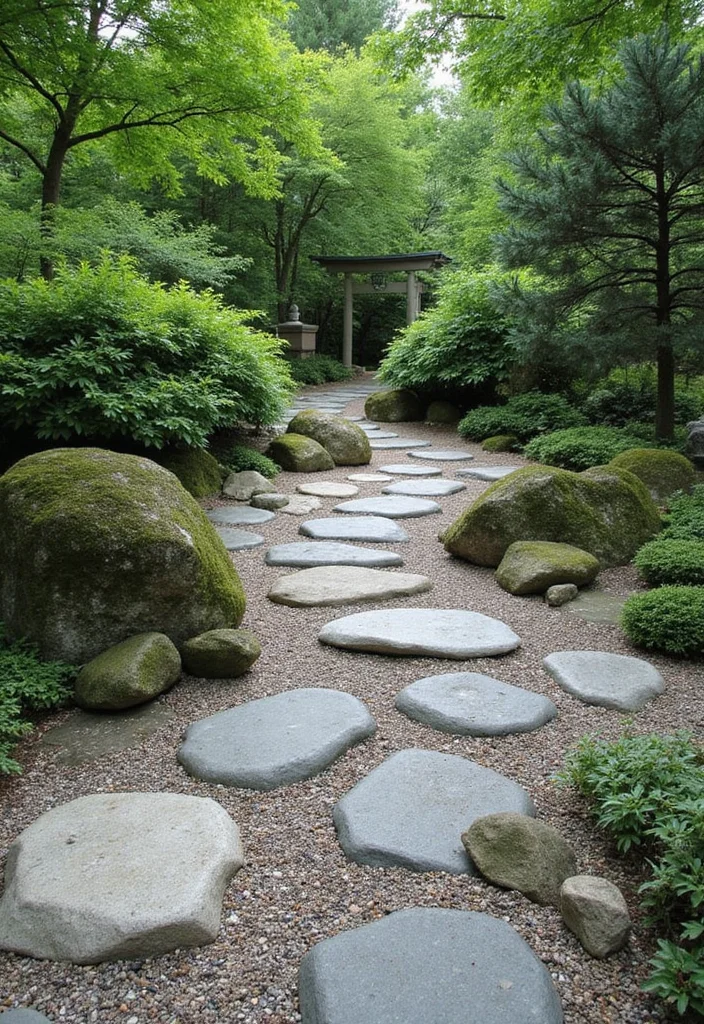
A pathway in your Zen garden guides visitors to moments of reflection. Use natural materials like stones or gravel to form a simple trail. This enhances the visual appeal and gives purpose to your garden’s layout.
Keep the path unobtrusive, allowing the surrounding elements to shine. Adding stepping stones can invite you to pause and contemplate at each step.
Pathway Design Tips:
– Make the path wide enough for comfortable walking.
– Choose materials that match your garden’s overall design.
– Add small lanterns for a calming evening ambiance.
A natural pathway transforms your Zen space into a mindful journey, enriching your meditation experience.
6. Reflective Surfaces
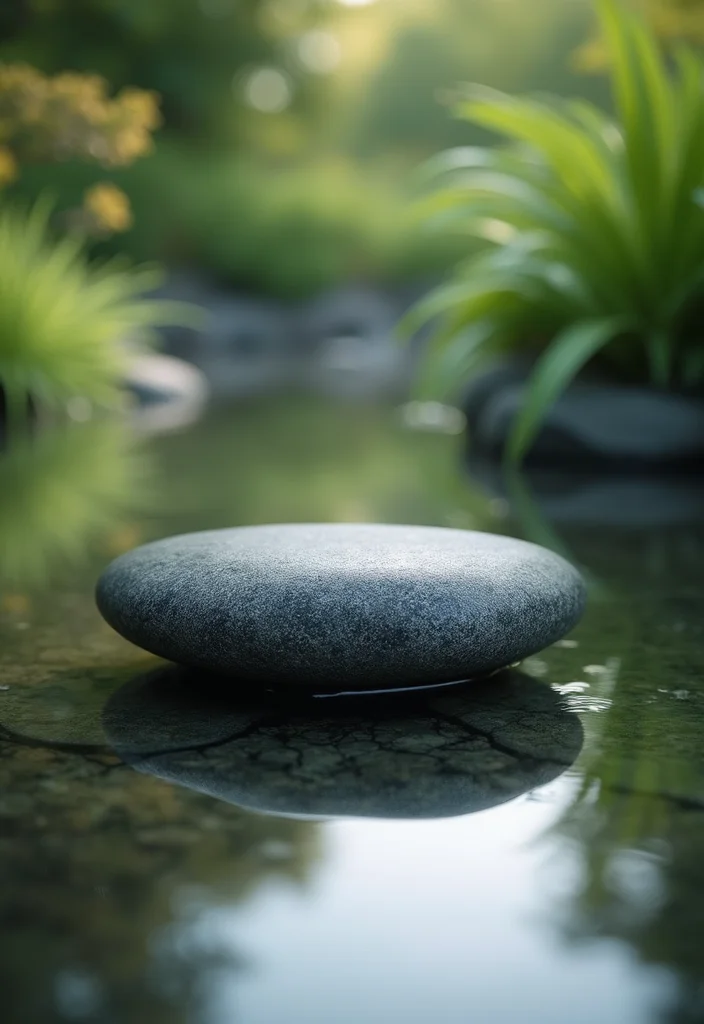
Reflective surfaces can enhance the peaceful ambiance of your Zen garden. Consider using a small mirror or polished stone to create interesting reflections. These elements can make your garden appear larger and more inviting by reflecting plants and stones.
Position reflective features thoughtfully to catch calming views rather than distractions. This can serve as a focal point while maintaining the tranquil vibe of your space.
Reflective Surface Tips:
– Use rounded edges for a softer appearance.
– Position them to reflect the most serene parts of your garden.
– Keep the overall design simple to align with the minimalist aesthetic.
Adding reflective elements invites a deeper, more immersive experience in your peaceful garden.
7. Peaceful Seating Areas
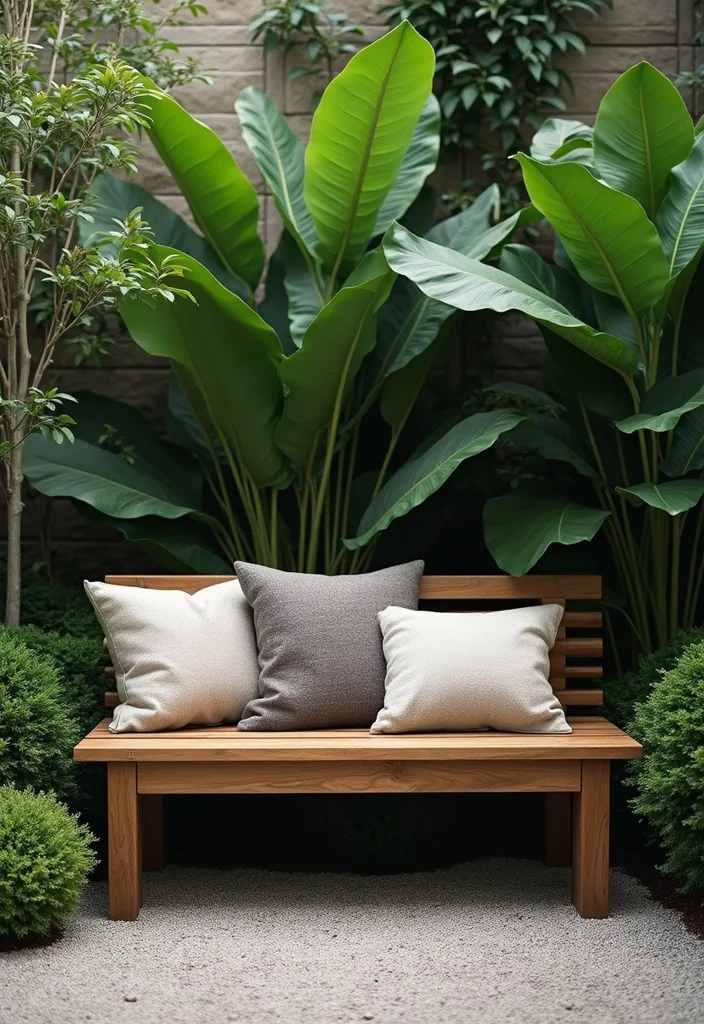
Creating a cozy seating area can turn your Zen garden into a personal retreat. Use simple benches made from natural materials like wood or stone. Ensure the seating blends seamlessly with the garden’s design while still providing comfort.
Position seating near water features or plants to enhance relaxation. Adding cushions in muted tones can provide comfort without overwhelming the space.
Seating Area Tips:
– Choose durable materials that withstand outdoor elements.
– Keep seating low to maintain an open feel.
– Include a small table for tea or books.
Your seating area becomes the perfect spot for meditation, reflection, or simply enjoying the beauty around you.
8. The Art of Pruning

Pruning is essential for maintaining the beauty of your Zen garden. It keeps plants healthy and symbolizes the removal of mental clutter. Regular trimming allows you to appreciate the natural beauty of your plants and keeps the garden tidy.
Use sharp tools to shape plants harmoniously while you reflect during the process. This can be a meditative act that connects you with nature.
Pruning Tips:
– Prune at the right season for healthy growth.
– Remove dead branches to encourage new growth.
– Shape plants into geometric forms to enhance the minimalist style.
The act of pruning fosters mindfulness as you tend to your garden, deepening your connection to the earth.
9. Seasonal Decorations
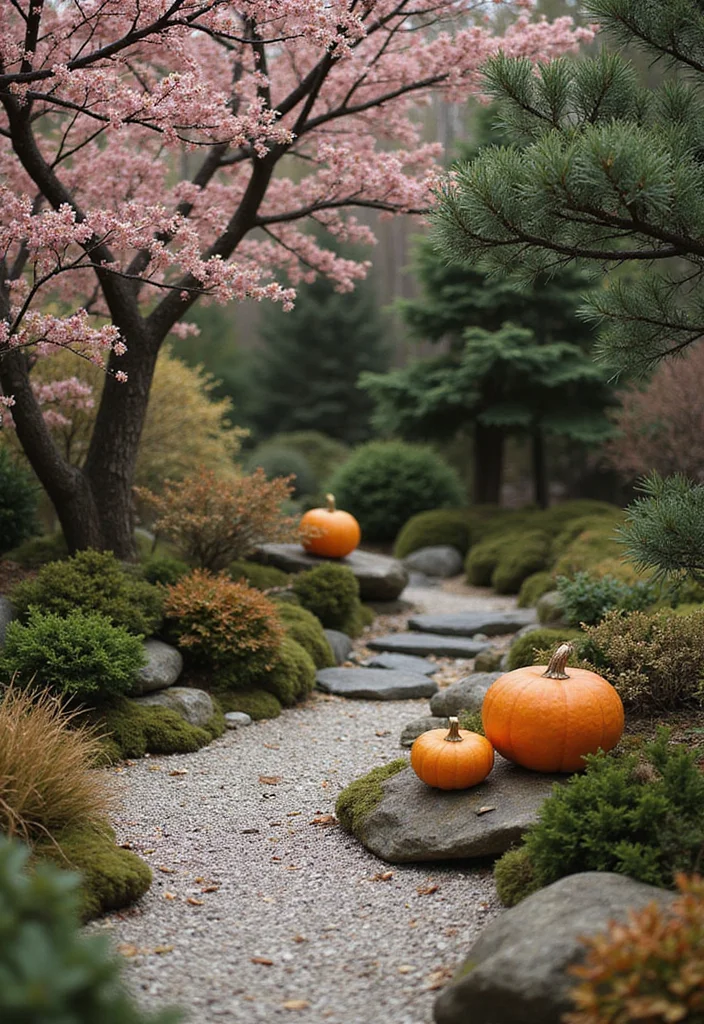
Incorporating seasonal elements keeps your Zen garden feeling fresh. In spring, add delicate flowers; in summer, vibrant pots can brighten the space. During autumn, pumpkins bring warmth, while evergreen branches in winter add charm.
Keep decorations simple to avoid distractions. A lantern or stone sculpture can remain through the seasons, maintaining a minimalist aesthetic.
Seasonal Decoration Tips:
– Rotate decorations to refresh your garden’s look.
– Use natural materials to keep it Zen.
– Stick to a muted color palette for harmony.
Seasonal touches allow your garden to evolve, making it a year-round sanctuary for reflection.
10. Incorporating Wood Elements
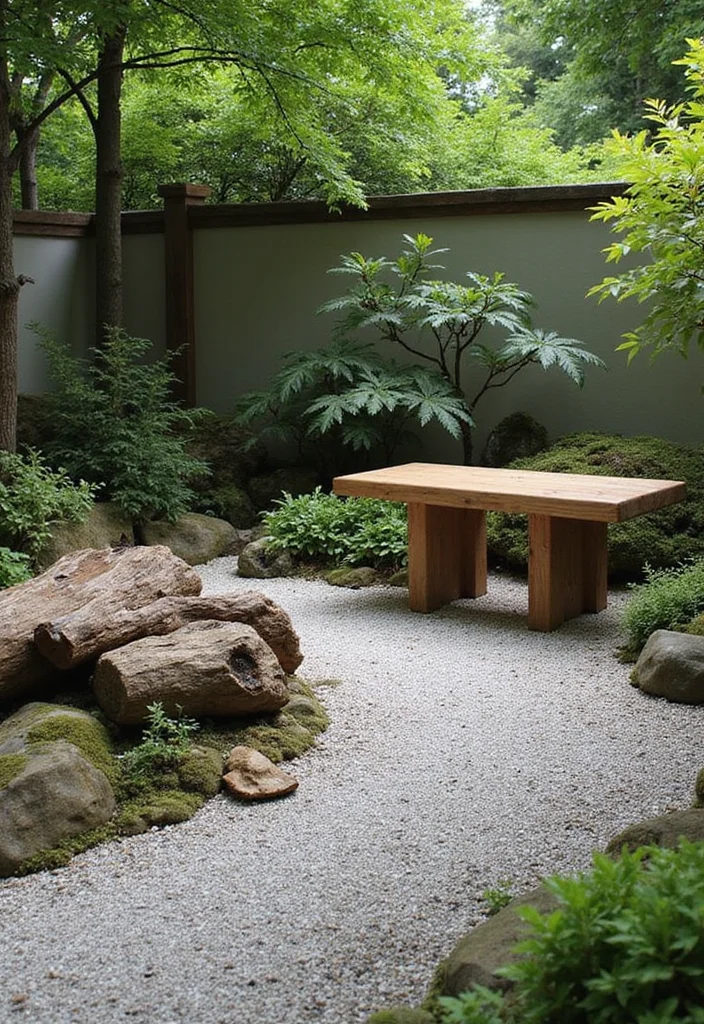
Wood adds warmth to your Zen garden. You can use it for benches, fences, or decorative touches. Untreated wood blends naturally with the surroundings, creating a grounding effect that enhances tranquility.
Add wood chips as mulch to maintain moisture and texture. Logs can serve as seating or natural decor, enriching the garden’s feel.
Wood Element Tips:
– Use sustainable wood sources for an eco-friendly approach.
– Incorporate wood of various sizes for an organic look.
– Avoid painted or stained wood to keep it simple.
Wood elements enhance the tactile experience, fostering a closer connection to nature.
11. Vertical Gardens
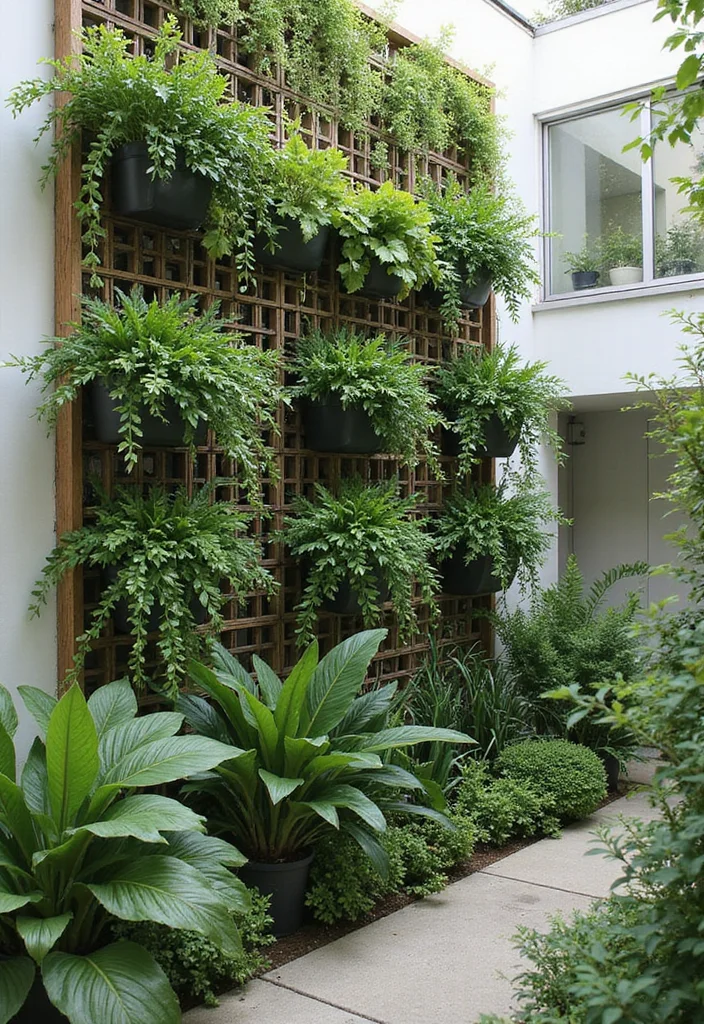
Vertical gardens maximize space and add beauty to your Zen garden. Use trellises or wall-mounted planters to create layers of greenery that draw the eye up. This adds dimension and allows for diverse plant selection, including herbs and flowers.
Consider climbing vines, ferns, or succulents for a varied display. The height not only beautifies but also maintains a minimalist feel.
Vertical Gardening Tips:
– Mix different heights and textures for visual depth.
– Ensure proper support for climbing plants.
– Use colors that complement your garden’s palette.
Vertical gardens create impressive focal points, bringing life to small spaces.
12. Natural Dividers

Natural dividers provide structure without disrupting the flow of your Zen garden. Use low wooden fences or stone walls to create distinct areas for meditation focus. These elements enhance the garden’s peacefulness while giving each area unique energy.
Natural dividers can also serve as backdrops for specific plants or decor. Keep them unobtrusive for an open design.
Divider Tips:
– Select materials that harmonize with your garden.
– Keep dividers low to maintain visual connection.
– Integrate climbing plants for a soft effect.
Using natural dividers organizes your Zen garden, creating intentional spaces for meditation and reflection.
13. Soft Lighting
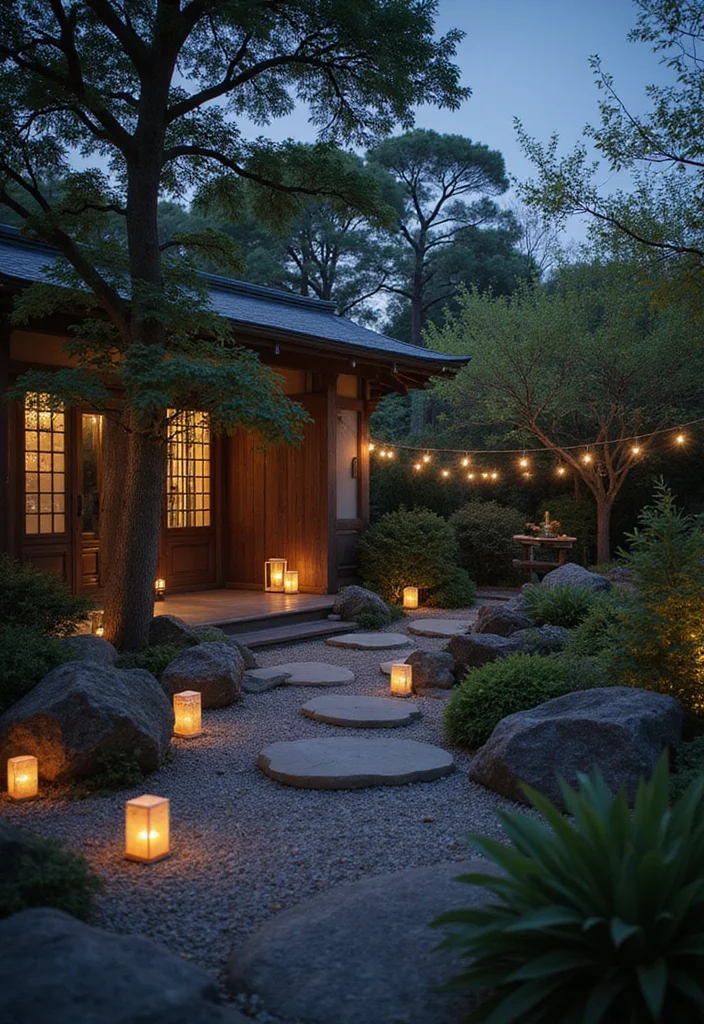
Soft lighting extends the tranquility of your Zen garden into the evening. Use solar-powered lanterns or string lights that provide a warm glow without overpowering the garden’s simplicity. Position lights near focal points like seating areas or water features to enhance their beauty after dark.
Choose lanterns made of natural materials to blend with your design. These lights create a calming ambiance for nighttime reflection.
Lighting Tips:
– Use warm lighting tones for a cozy feel.
– Keep light sources minimal to avoid distractions.
– Vary light heights for an organic look.
Soft lighting invites you to unwind under the stars, enriching your peaceful moments.
14. Textural Variety
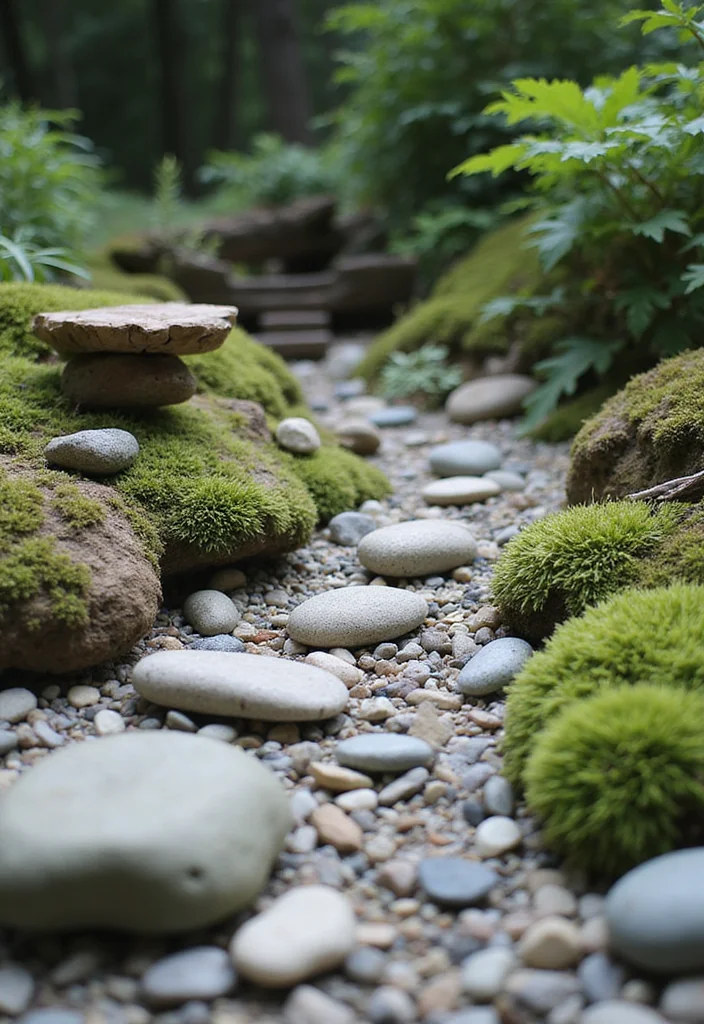
Adding texture to your Zen garden creates depth without overwhelming the minimalist design. Use a mix of materials like stones, wood, and plants with different leaf shapes. Pair smooth pebbles with rough bark and soft moss for a beautiful contrast.
Incorporate driftwood or stone sculptures to layer the garden. Each textural element should contribute to a serene experience, promoting mindfulness.
Textural Variety Tips:
– Choose materials that resonate with your garden’s purpose.
– Avoid overly contrasting textures that disrupt calm.
– Layer textures thoughtfully for an organic flow.
A thoughtful mix of textures enhances the visual experience, allowing your mind to relax.
15. Feng Shui Principles
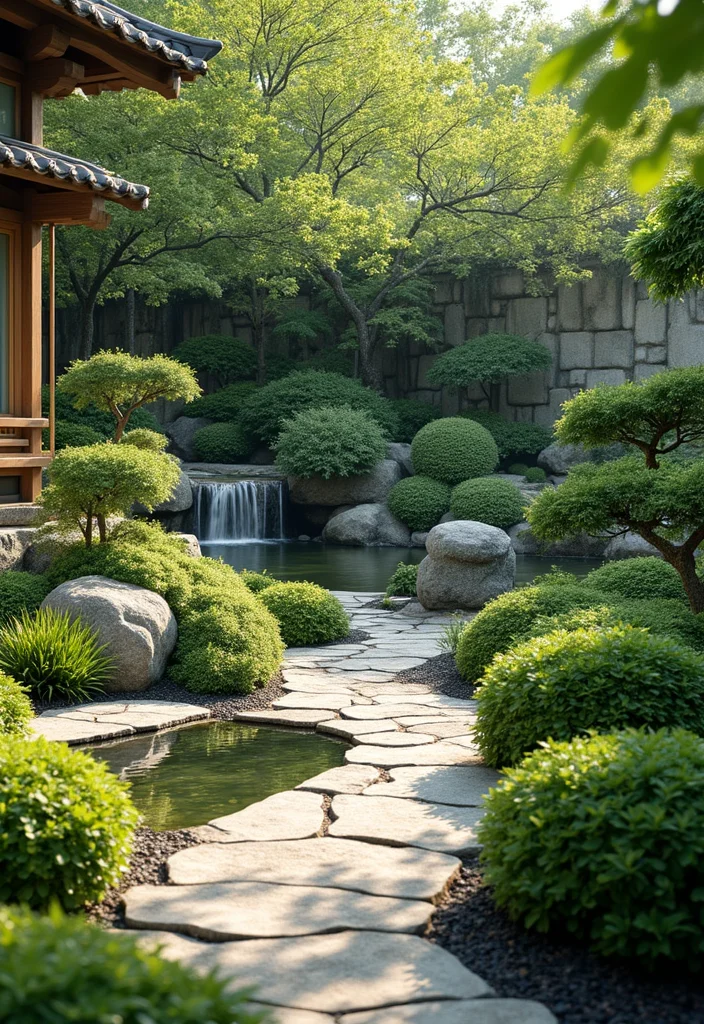
Using Feng Shui principles can enhance the energy flow in your Zen garden. Pay attention to where you place elements like water features and plants. Positioning water to the east or southeast promotes positive energy and balance.
Keep pathways clear and inviting, guiding visitors through the space. Use odd numbers of plants and balance hard and soft elements for harmony.
Feng Shui Tips:
– Regularly assess your layout for balance.
– Choose colors that reflect tranquility, like blues and greens.
– Create a sense of enclosure while allowing for flow.
Applying Feng Shui can elevate your Zen garden, creating an inviting space for reflection.
16. Garden Art and Sculptures
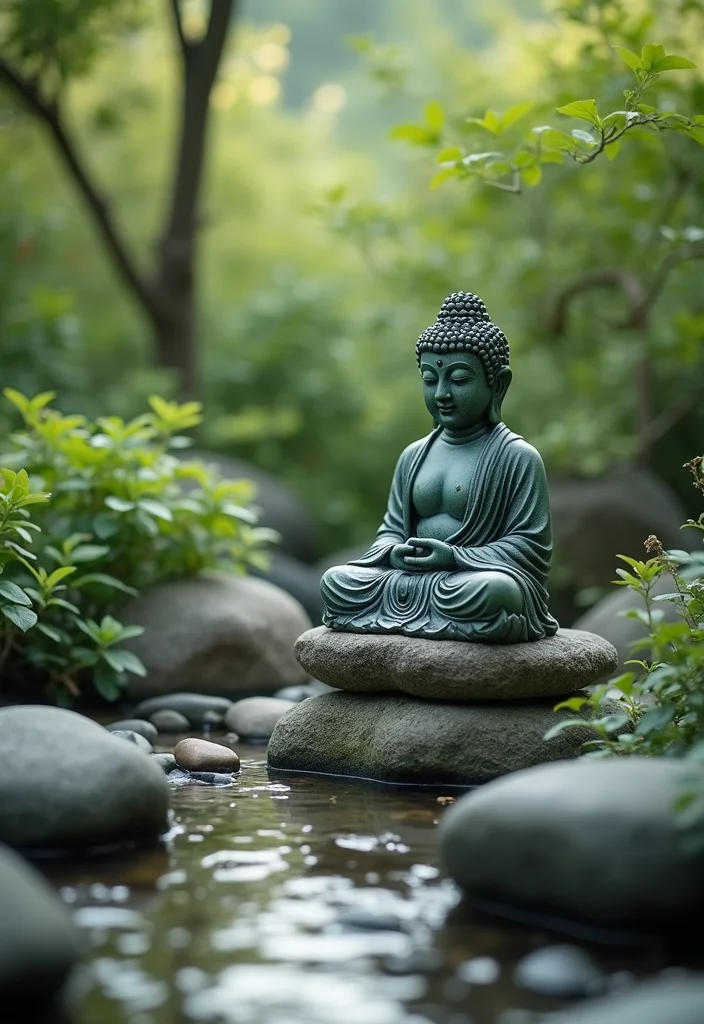
Incorporating art into your Zen garden enhances beauty while maintaining serenity. Choose calming sculptures like Buddha statues or simple figures that serve as focal points. These elements invite meditation and reflection without distracting from the garden’s essence.
Ensure your art complements the minimalist design to keep the focus on tranquility. Wind chimes can add gentle sounds, enriching the sensory experience.
Art Tips:
– Select pieces that resonate personally for deeper connection.
– Place art away from pathways to keep flow uninterrupted.
– Maintain a simple, serene color palette.
Integrating art adds character to your garden, inviting reflection and enhancing the overall ambiance.
17. Mindful Atmosphere
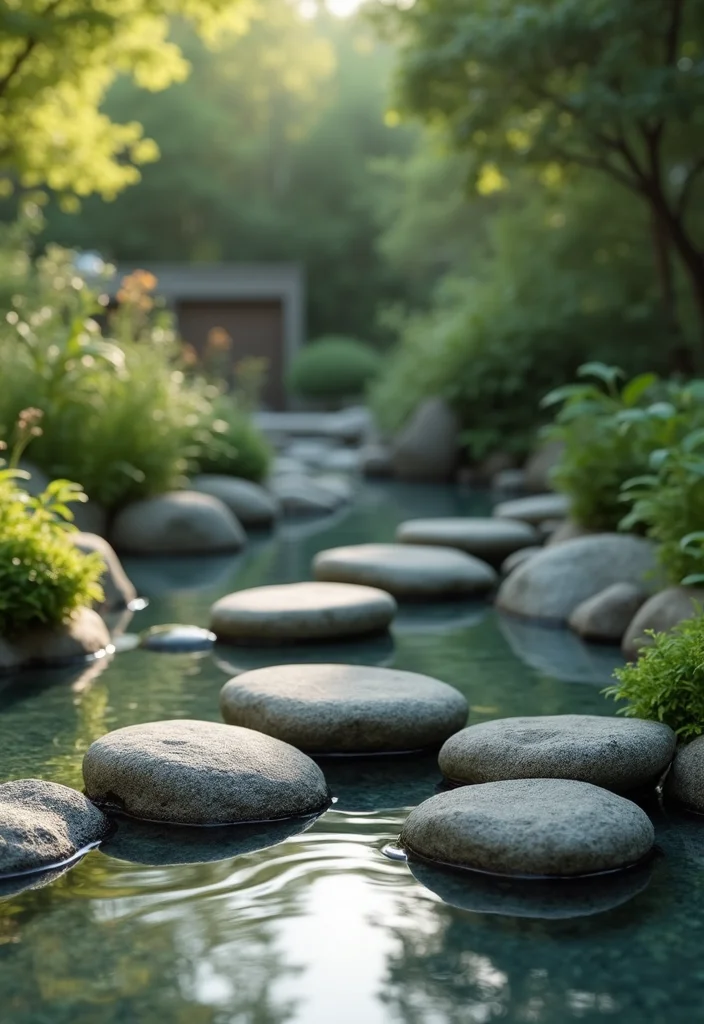
Creating a mindful atmosphere in your Zen garden is essential for peace. Minimize noise by positioning your garden away from busy streets or using sound barriers like bamboo. Incorporate soft textures, calming scents from plants, and gentle water sounds to enhance the ambiance.
Consider planting herbs like lavender or chamomile for a relaxing fragrance. A comfortable setting promotes mindfulness, making it easier to unwind.
Mindful Atmosphere Tips:
– Use natural materials to absorb sound and promote calm.
– Create seating areas that invite relaxation.
– Regularly check your garden to maintain serenity.
A mindful atmosphere turns your Zen garden into a sanctuary for meditation and introspection.
18. Community Involvement
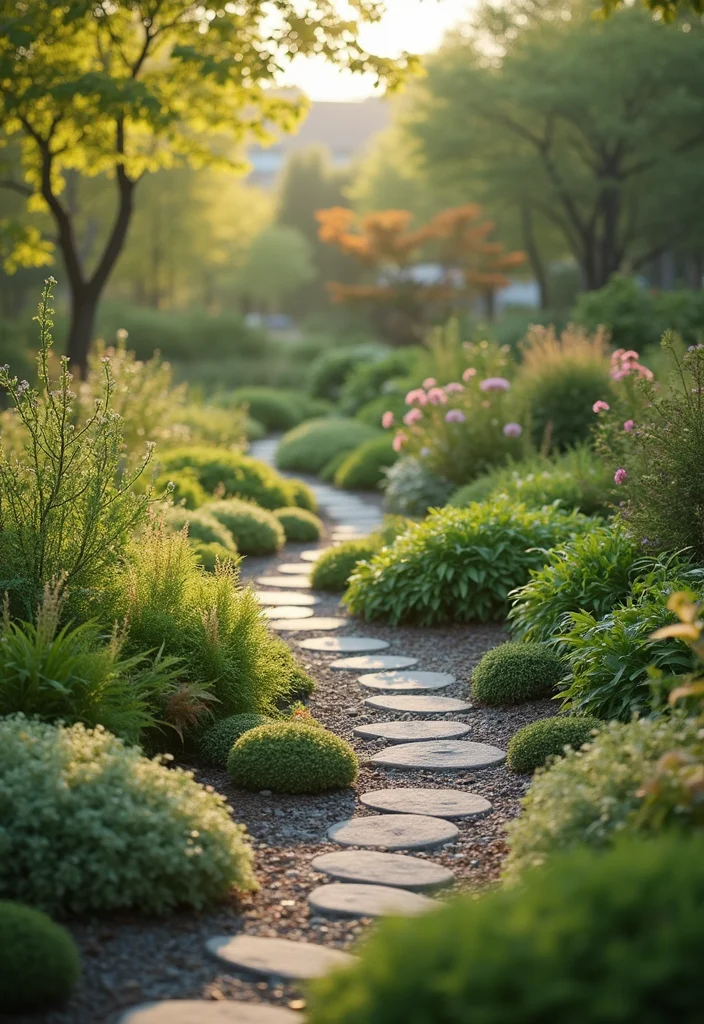
Creating a community Zen garden extends peace to others. Invite neighbors to contribute plants or art, fostering connection and purpose. Organize community gardening days to maintain and cultivate the space as a group.
These gatherings promote mindfulness while building relationships. It’s a wonderful way to share the benefits of your garden.
Community Tips:
– Establish a shared vision for inclusivity.
– Host workshops on gardening or mindfulness to deepen connections.
– Encourage sharing experiences and stories related to the garden.
Community involvement enriches your Zen garden, transforming it into a hub for shared peace and reflection.
19. Simple Maintenance Practices

Maintaining a Zen garden can itself be a meditative practice. Use simple techniques to keep it beautiful while allowing for regular engagement. Watering, pruning, and clearing debris can become mindful routines that contribute to your peace.
Opt for organic methods to care for plants, promoting sustainability. Tending to your garden can serve as a meditation, helping focus on the present.
Maintenance Tips:
– Set aside time weekly for garden care.
– Keep tools organized for easy access.
– Reflect on your feelings while gardening to cultivate mindfulness.
Simple maintenance practices contribute to the harmony of your Zen garden, ensuring it remains a peaceful space for reflection.
20. Embracing Imperfection

Embracing imperfection is a core Zen principle. Allow for natural growth patterns and organic shapes in your garden without striving for perfection. This acceptance deepens your connection with nature and enriches your gardening experience.
Plants may not always grow as you expect, and that’s perfectly fine. Celebrate each unique plant and stone, allowing your garden to evolve over time.
Embracing Imperfection Tips:
– Avoid rigid designs; let your garden flow naturally.
– Appreciate seasonal changes as part of the journey.
– Stay open to new ideas as your garden grows.
Embracing imperfection leads to deeper insights and personal growth, enriching your gardening and meditation practice.
Conclusion
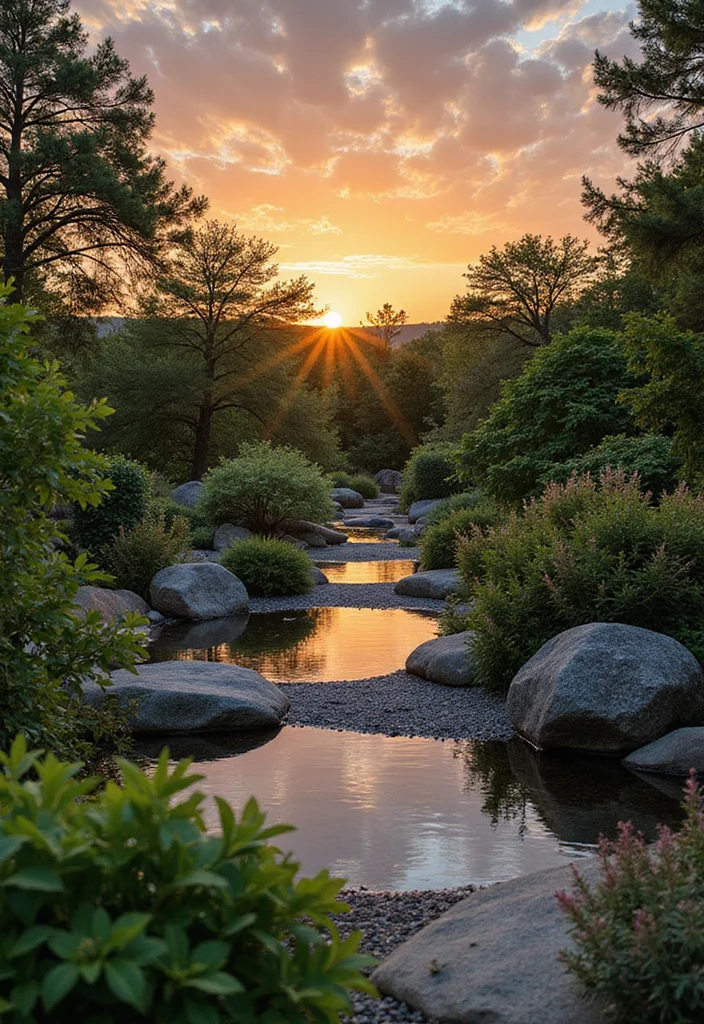
Creating a Zen garden meditation space is an enriching journey towards tranquility and mindfulness. By incorporating these 20 inspiration ideas, you can craft a serene oasis that invites reflection and peace into your life.
Each element you choose will contribute to your overall sense of calm, making your garden a personal retreat from the chaos of the outside world.
Take the ideas that resonate with you and start your own journey toward building a peaceful sanctuary right where you are.
Frequently Asked Questions
What Are the Key Elements of a Zen Garden Design?
Creating a Zen garden involves a few key elements that promote a sense of tranquility and mindfulness. Start with raked gravel or sand to symbolize water, and incorporate rocks to represent mountains. Choose minimalist plants like bonsai or succulents for container gardening, as they require minimal maintenance and enhance the serene atmosphere. Don’t forget to include a peaceful seating area where you can meditate or simply enjoy the beauty of your surroundings.
How Can I Incorporate Minimalist Container Gardening into My Zen Space?
Minimalist container gardening is a fantastic way to enhance your Zen space! Choose simple, elegant pots that complement your overall design. Focus on a few carefully selected plants, like Japanese maples or ornamental grasses, that evoke a sense of peace. Arrange your containers thoughtfully on your patio or balcony to create a harmonious flow, allowing for easy maintenance while enjoying the calming effects of your garden.
What Are Some Inspiring Zen Garden Ideas for Small Spaces?
If you’re working with a small area, don’t worry! There are plenty of Zen garden ideas that can transform your space. Consider using vertical gardens or wall planters to maximize your area without sacrificing style. A small rock garden with a few strategically placed plants can also create a microcosm of tranquility. Use mirrors or reflective surfaces to enhance the feeling of space and light, making your tiny Zen retreat feel expansive.
How Can I Create a Meditation Space in My Zen Garden?
To create a meditation space in your Zen garden, focus on finding a quiet corner that feels peaceful. Use natural materials like wood or stone to build a small seating area or platform. Surround this spot with calming elements, such as soft lighting, water features, or fragrant plants. Ensure that your meditation space is free from distractions, allowing you to fully embrace the serenity and mindfulness that comes with your gardening practice.
What Maintenance Tips Ensure Tranquility in Gardening?
Maintaining tranquility in your garden involves a few practical tips. Regularly remove weeds and debris to keep your Zen space looking pristine. Water your plants early in the morning or late in the evening to avoid evaporation and minimize stress on them. Consider using organic fertilizers to promote healthy growth without harming the natural balance of your garden. Lastly, take time to simply sit in your garden and enjoy the fruits of your labor, fostering a deeper connection with your peaceful oasis.